Hornbill Agriculture Sdn. Bhd. is a Sarawak-based regenerative farming venture running an integrated farm-to-grocer model that is growing real food, supplying it locally, and empowering smallholder farmers along the way. Founder Alan Wei had built genuine momentum: an active social media presence, a community of consumers buying fresh produce weekly, and a working farm with real revenue behind it.
What the business didn’t have was a place to send an investor.
Underneath the enquiries is something simpler: the site gave investors somewhere to verify what was already true. Hornbill was a registered company with revenue and a working model long before the website existed but none of that was checkable from a feed.
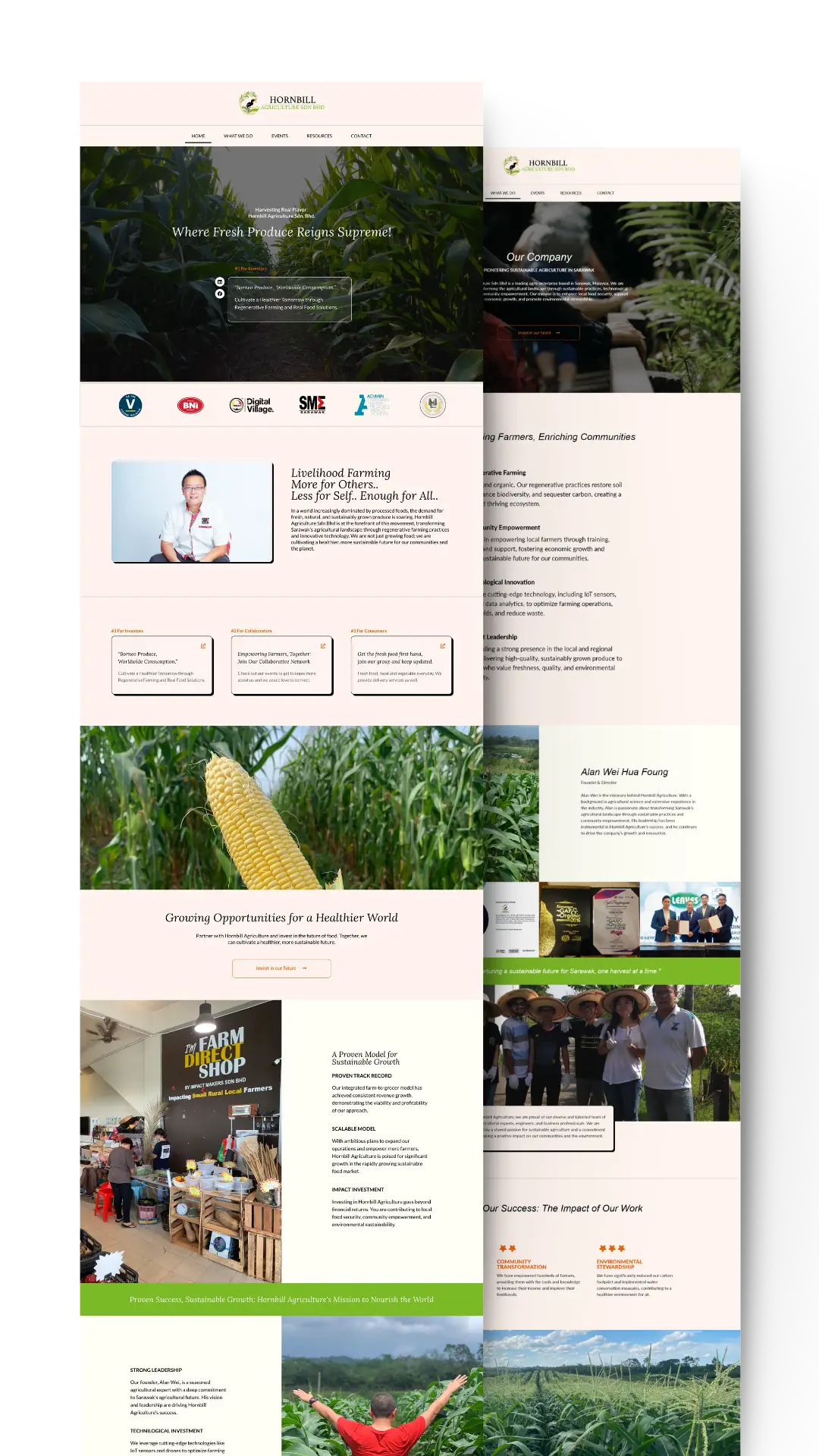
The copy is what did the confirming. Every doubt an investor brings to an agriculture pitch was answered on the page before they could raise it — is this a business or a farm answered by the corporate framing and audience structure, is this investable answered by a proven model stated in three plain claims, can they execute answered by a founder’s track record and a named technology stack, is this just local answered in six words: Borneo Produce, Worldwide Consumption.
Investors weren’t won over by photography. They were won over by finally reading a business described as a business.

Hornbill didn’t have a business problem; it had a visibility-of-substance problem. A registered company with real revenue and a working model was being judged from a social feed, and in agriculture, anything ambiguous reads as risk. Fixing that meant diagnosing before designing: repositioning the business as an agri-enterprise rather than a farm, then giving investors one place to verify it.